Showing posts with label NASA. Show all posts

Wednesday, December 1, 2021

Summer Reading & NASA & Challenged Books, Oh My!

 Today, we are bringing you three opportunities to be aware of for the month of December.


On Thursday, December 2, you can join the CSLP (Collaborative Summer Library Program) Summer Symposium. This is CSLP's first annual, all-day event offered for free! The sessions throughout the day will cover the topics of programming ideas, outreach/partnerships, and promotion/marketing. For more details and to register, visit here. 


Image from pixabay.com 

On
Wednesday, December 15 at 10:00 am, join Shannon Schultz, Public Library Administration Consultant at the Wisconsin Department of Public Instruction (DPI). She will provide you with practical tips and resources for dealing with challenged materials in your library. For more details and to register, visit here

 And here's a timely thought to go with this topic: Deborah Caldwell-Stone, director of the American Library Association’s Office for Intellectual Freedom, recently said that during her 20 years with the organization, “there’s always been a steady hum of censorship, and the reasons have shifted over time. But I’ve never seen the number of challenges we’ve seen this year.”

Image from Wikimedia commons.


Finally, check out this post from Hannah Arata on the Programming Librarian blog. Hannah provides resources, programming ideas, and take-home kit suggestions to celebrate NASA's telescope launch on December 22, 2021


Tuesday, May 7, 2019

Put your best space face forward with the NASA Selfie app!

Y'ALL.  Thanks to a fantastic post on the Teen Services Underground Facebook group, I just learned about an app that's pretty darn perfect for this year's summer theme: NASA Selfies!
                                                   
The app, created by the Jet Propulsion Laboratory to celebrate the 15th anniversary of the launch of NASA's Spitzer Space Telescope, is free and available for both iOS and Android.

The process is simple:

1. Download the app.
2. Take a selfie (or a picture of your pet, another person, what-have-you)
3. Take your face--now placed inside a virtual spacesuit--and decide which Spitzer image you want for a background.

There's currently over 30 different background options--and a random button, if you just can't choose and/or want to be surprised!  The app also includes a bit of information about your selected interstellar background.

How fun would this be for the summer?!  I think patrons of all ages will get a kick out of the chance to send themselves on a galactic adventure, right from their handheld device.

Click HERE to read the official press release.

And, for education purposes (of course) I tried the app a few times myself. *ahem*


Tuesday, October 23, 2018

NASA's Media Library...At Your Fingertips!

Did you know NASA's entire media library is available for you to use?

That's right, the ENTIRE MEDIA LIBRARY.  Even better?  All the media is free to utilize, both in terms of cost and copyright.

Image result for firefly gif excited

Can you imagine the potential for next year's Summer Reading Program?  A Universe of Stories--complete with real photographs, sounds, and more of the ACTUAL universe!  They can be utilized for decor, promotion, or even programs! 

(What's that, lovely patron?  You want legit space sounds to use in your stop motion project?  Boy oh boy, do I have some good news for you!)

This image of the Eagle nebula shows the self-emission of the intensely cold nebula gas and dust as never seen before; the nebula intricate tendril nature, with vast cavities forms an almost cave-like surrounding to the famous pillars.
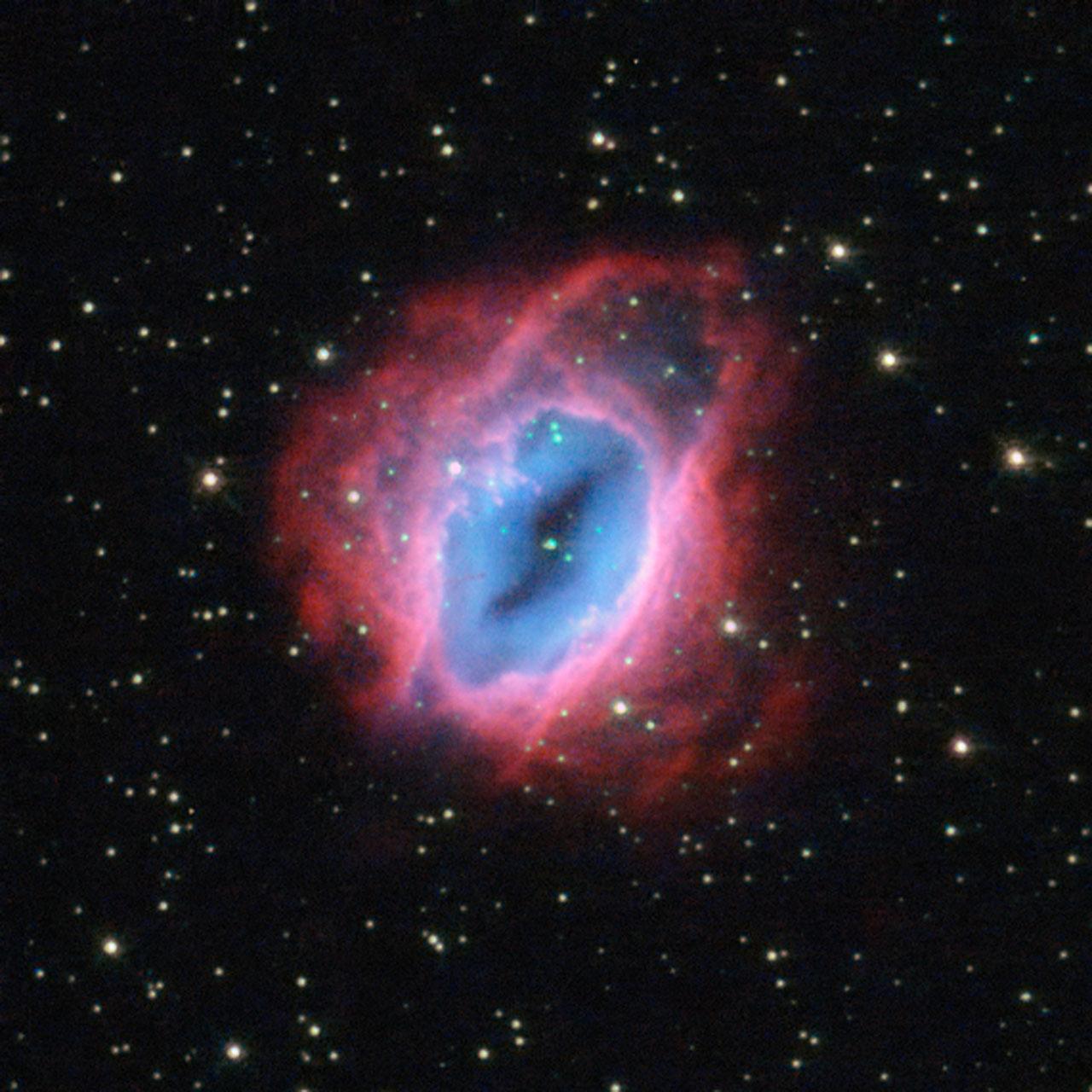
It may look like something from "The Lord of the Rings," but this fiery swirl is actually a planetary nebula known as ESO 456-67. Set against a backdrop of bright stars, the rust-colored object lies in the constellation of Sagittarius (The Archer), in the southern sky.

In this image of ESO 456-67, it is possible to see the various layers of material expelled by the central star. Each appears in a different hue - red, orange, yellow, and green-tinted bands of gas are visible, with clear patches of space at the heart of the nebula. It is not fully understood how planetary nebulae form such a wide variety of shapes and structures; some appear to be spherical, some elliptical, others shoot material in waves from their polar regions, some look like hourglasses or figures of eight, and others resemble large, messy stellar explosions - to name but a few.

Image Credit: ESA/Hubble and NASA

<b><a href="http://www.nasa.gov/audience/formedia/features/MP_Photo_Guidelines.html" rel="nofollow">NASA image use policy.</a></b>

<b><a href="http://www.nasa.gov/centers/goddard/home/index.html" rel="nofollow">NASA Goddard Space Flight Center</a></b> enables NASA’s mission through four scientific endeavors: Earth Science, Heliophysics, Solar System Exploration, and Astrophysics. Goddard plays a leading role in NASA’s accomplishments by contributing compelling scientific knowledge to advance the Agency’s mission.

<b>Follow us on <a href="http://twitter.com/NASA_GoddardPix" rel="nofollow">Twitter</a></b>

<b>Like us on <a href="http://www.facebook.com/pages/Greenbelt-MD/NASA-Goddard/395013845897?ref=tsd" rel="nofollow">Facebook</a></b>

<b>Find us on <a href="http://instagram.com/nasagoddard?vm=grid" rel="nofollow">Instagram</a></b> 

This dazzling infrared image from NASA Spitzer Space Telescope shows hundreds of thousands of stars crowded into the swirling core of our spiral Milky Way galaxy.

Happy exploring!

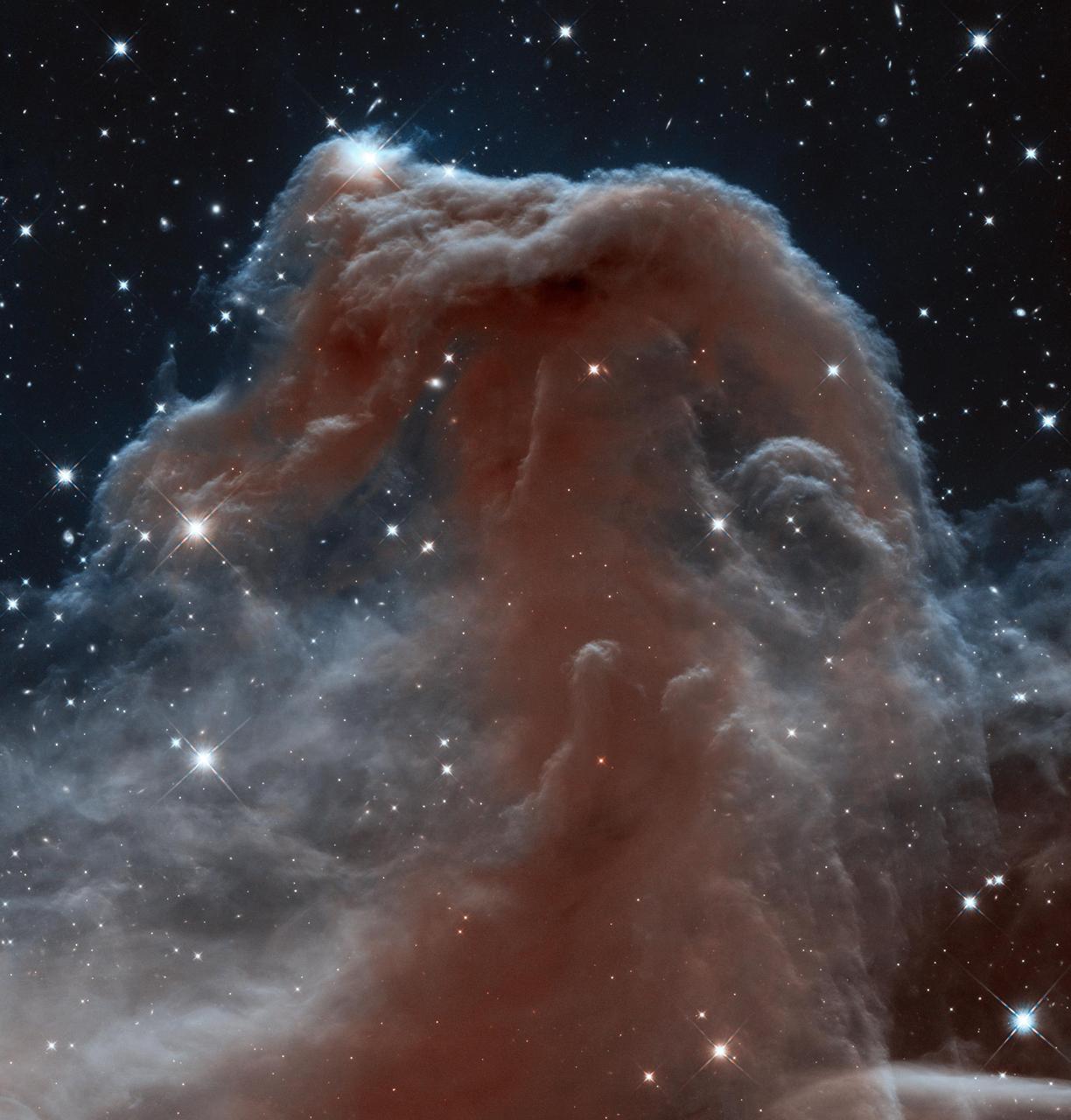
Backlit wisps along the Horsehead Nebula upper ridge are being illuminated by Sigma Orionis, a young five-star system just off the top of this image from the Hubble Space Telescope. Resembling an opulent diamond tapestry, this image from NASA Hubble Space Telescope shows a glittering star cluster that contains a collection of some of the brightest stars seen in our Milky Way galaxy called Trumpler 14.