Showing posts with label early literacy spaces. Show all posts

Tuesday, November 12, 2019

Literacy Promotion in Laundromats: Reaching Families in Everyday Spaces

The post Literacy Promotion in Laundromats: Reaching Families in Everyday Spaces appeared first on ALSC Blog.

"For years children’s librarians have capitalized on the potential of reaching families in everyday spaces, like local laundromats. Families spend an average of 2.5 hours during each visit to the laundromat—a place where they routinely visit about once a week. Over the past five years, Too Small to Fail, the early childhood initiative of the Clinton Foundation, has been leading a partnership with the LaundryCares Foundation to transform laundromats across the country into playful, literacy-rich environments for children and families. These “Family Read, Play & Learn” spaces are designed to meet families where they are and encourage parents to engage in language-rich activities like talking, reading, and singing during laundry time. Each space provides a set of high-quality tools and resources, including a book shelf, an assortment of bilingual children’s books, furniture, engaging laundry-themed posters with parent-child conversation prompts, and a variety of other early literacy toys and materials. These kits have been purchased by laundromat owners and early literacy groups nationwide who are committed to helping children learn and believe in the power of their space to make a positive impact on the families they serve.
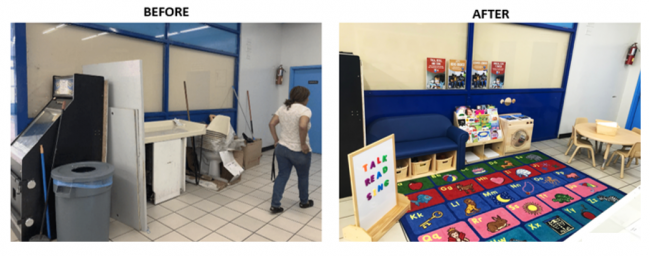
A before and after picture of laundramats
Dr. Susan Neuman, Professor of Childhood and Literacy Education at New York University conducted a pilot evaluation of the “Family Read, Play & Learn” spaces throughout laundromats in low-income communities in New York City. In the first phase, researchers compared three “treatment” laundromats—which included the “Family Read, Play & Learn” spaces—to three “control” laundromats that did not include the spaces. The research revealed that children engaged in 30 times more literacy-rich activities in laundromats with our literacy play spaces compared to the control sites. In the second phase, librarians from New York, Queens, and Brooklyn Public Libraries were brought in to conduct weekly story times at the laundromat. By adding librarians to the space, there was a significant value added to these spaces. Researchers found that during story times led by librarians, the average stay per child increased to 47 minutes, representing a substantial amount of sustained engagement in early literacy activities.

As evident in the research, an integral part of this initiative involves bringing community supports and literacy programming to these laundromat spaces, inviting local libraries and librarians to conduct family story times at these spaces. Our goal is to install these spaces into thousands of laundromats across the country.. and our hope is to partner with libraries across the country to promote children’s literacy development—one laundry load at a time.

Libraries, please join our national movement! Too Small to Fail and the LaundryCares Foundation are seeking to partner with librarians to lead story times in laundromats within their local communities. This is an incredible opportunity for librarians to form new community partnerships and reach children in some of the most underserved communities in our country. If you are interested in joining our national movement, please contact Kari Kurjiaka at kkurjiaka@clintonfoundation.org. To learn more about Too Small to Fail, please visit www.toosmall.org or www.laundrycares.org/kits for information about the “Family, Read, Play & Learn” spaces.

Today’s guest blogger is Kari Kurjiaka. Kara is a Program Associate at Too Small to Fail.

If you’d like to write a guest post for the ALSC Blog, please contact Mary Voors, ALSC Blog manager, at alscblog@gmail.com."

Tuesday, April 3, 2018

DIY FYI: Faux Lite-Brite &/or Magnet Wall

Looking for a fun, interactive element to add to your youth area that won't take up too much space--AND won't break the bank?  

How about a faux Lite-Brite?  


Or perhaps a magnet wall is more to your liking?


The background is a steel pegboard, like you'd use in a garage or workshop.  These are available at most hardware/home improvement stores.  If you're more of an online shopper, Amazon has some at a reasonable price with a variety of color options! 

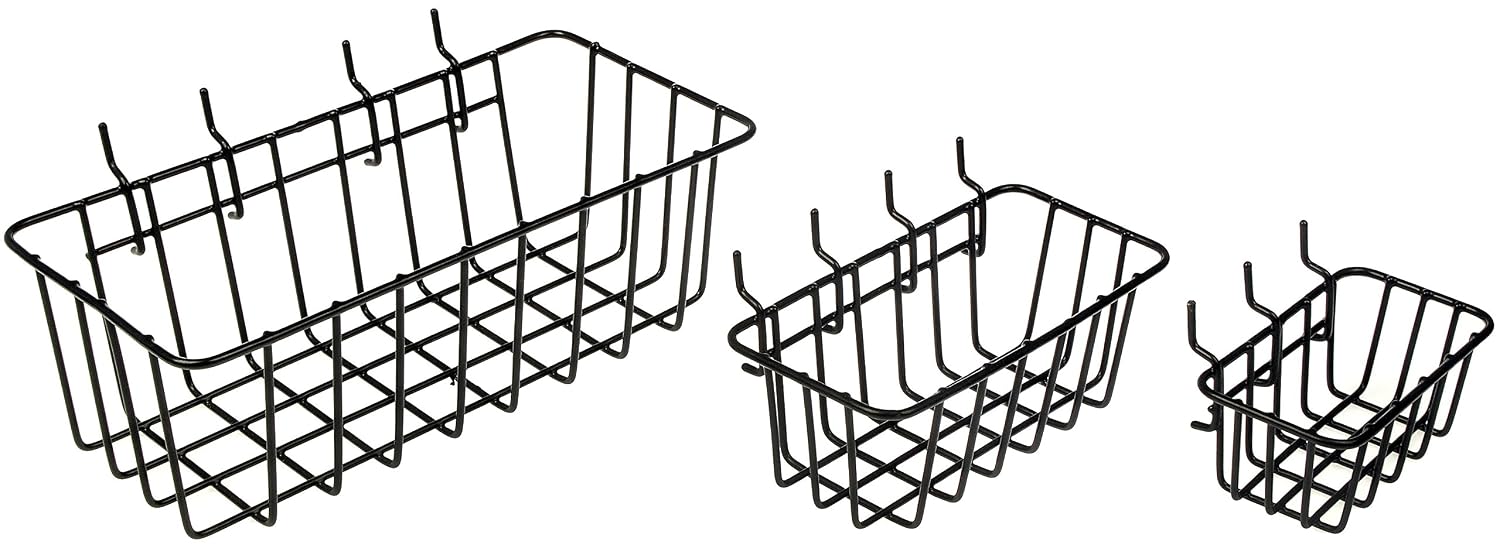
A super rad benefit to using these boards is they were built to store/display things!  You can obtain small wire baskets to hold all your goodies and adhere them right to your board! (These are also available on Amazon, if you are so inclined.)  NOTE: Depending on what you want to store, you might want to consider some sort of reinforcement/barrier...  Snazzy duct tape basket to the rescue, am I right?!

 
As for the "lights" for the Lite-Brite, you can use any sort of peg you'd like.  The board pictured uses neon golf tees!  The tees are somewhat long for the board, so you might want to consider trimming them down, though this isn't essential.

Image may contain: text

No automatic alt text available. 

What others ideas do you have for these snazzy little boards?  
Share them in the comments!

Wednesday, March 29, 2017

Passive Programming for Little Ones

Pixabay
ALSC blog is a wonderful resource for all aspects of children's services, especially programming. One post recently caught my attention because it focused on passive programming for toddlers and preschoolers. I had been searching for ideas to freshen up my offerings for that age group. I also had an eye out for ideas that weren't too staff intensive

Guest blogger Natalie Braham of the Denver Public Library detailed her branch's experience with their early literacy passive program in the post "Passive programming and early literacy: designing creative spaces for young learners".  The staff wanted to add play opportunities, especially in the colder months, but did not want to use staff to monitor the room. Caregivers were required to be in the room. They also struggled with finding toys that would work for ages 6 months to 5 years old. I have also experience this program in my search for toys for in-library use.

Their program is up and running and they are looking to expand it.  I'm excited to try something like this at my library. How have you incorporated play into your programming?


Friday, May 1, 2015

Early Lit "Facelifts"

Mel's Desk just had a great post about brainstorming early literacy activities, and she linked to some great ideas from programs to quick "facelifts" that can brighten up any area that needs some early literacy love. The best part is that many of them are great jumping off points, leaving plenty of room to add your own spin. Or get really crazy, grab some friends or colleagues, and hold a brainstorming session of your own (be sure to share your great ideas with the YSS blog - email kelsey@lacrosselibrary.org)!
Desk facelift from Future Librarian Superhero

Friday, October 31, 2014

Easy Early Literacy Spaces, Part 2

This post brought to you by Holly Storck-Post, Youth Services Coordinator for Monroe Public Library. 


Desk Display


We used the front of our desk as display space when we were raising butterflies this summer, and I realized it was a great way to get kids and families looking at a display.


The first day that we had the alphabet up, and a toddler was walking up to the desk with his mother and exclaimed, “Mama, sing my abc’s!”


The READ posters were fun because the kids would look from us, to the poster, and back, and try to figure out what they were seeing!


The emotions idea came from here, and it has had a good response. One kid only wanted to name the “positive” emotions (happy, excited, sleepy) and wouldn’t mention the “bad” once (sad, angry, scared). Luckily, he was joined by a parent who picked up on that and talked about it with him.


More Spaces!

These footprints grew out of a desire to fill and empty spot and having something for the slightly older kids to do while a parent was busy with a younger sibling. We are on our second set of footprints, since even laminated footprints get pretty worn out after being stepped on that many times! I was also surprised to find that they get rearranged quite often. One day I came in to find they had turned a corner!


My staff member got the ideas for both our stairs and bathroom from Hennepin County. Again, I added Spanish to the stairs, and we hear the kids coming up and counting on a daily basis. This is one of the additions that I have gotten the most compliments on from community members.


The library I worked at as a page in library school had a growth chart in front of the circ desk, and it was incredibly popular. Kids measured themselves and their families constantly, and I thought it would be a neat addition to our children’s room. We have a library wide mural on one of our walls, painted by a local artist, and I asked her to do the growth chart.


As I was putting up my five practices tips the other day, I realized the singing is something that we do a TON of in programming and less so in the children’s room. Thus was born our “song of the week” station. I put it up on a day I worked alone, and then asked my staff to pretty please play along and sing if anyone asked them. So far I’ve definitely seen parents reading the sign, and the images match my song cube that I take to daycare storytimes, so some kids might start to recognize that!


Check out Easy Early Literacy Spaces, Part 1 for more ideas!

Wednesday, October 29, 2014

Easy Early Literacy Spaces, Part 1

This post brought to you by Holly Storck-Post, Youth Services Coordinator at Monroe Public Library.


I started at my current position as Youth Services Coordinator in June, and since then I’ve been adding little early literacy activities and awareness to our children’s section. Some of the things I came up with, a lot of them were suggestions from my amazing staff, and many were inspired by other libraries!


Here is some of what we’re doing. Anything not mine includes a link to the original idea whenever possible!


Early Literacy Tips

This grew out of the idea of posting early literacy tips during storytime. I don’t do our regular in-house storytimes, and I wanted the opportunity to explain why we offer so many different activities. I typed up a TON of tips, some taken straight from ECRR, some adapted from The Early Literacy Kit, and a few more that I specifically wanted to address. I put them in speech bubbles, laminated them, and now I have a backlog that I can pull from every time I change a display or put out a new activity.


Activity Board
The inspiration for this idea originally came from Brooke. I copied her idea, adding in the Spanish language since we have a growing Spanish speaking population and I am working on ways to increase our services to these patrons. At first I just taped it up to the pillar, which quickly failed, so then we added a magnet board in order to have more options.
The next activity at this station was something I came up with for a simple matching game. When I used this game in bilingual storytime, a kid quickly corrected me from “diamond” to “rhombus!”


Play Table

One of my staff who specializes in early literacy saw a post on this blog about a felt table, and suggested that we try it. I covered our table in felt (you need a LOT of tape), and pulled out some of basic felt pieces and wooden props to set out. The kids and families have LOVED this one. One child made us additional props for the animals scene using paper and crayons, and the flowers are getting sorted by color almost daily (on the other days they end up in a big pile on the floor. Those are the days I eat a lot of chocolate).


More ideas for Easy Early Literacy Spaces coming soon!  

Tuesday, April 1, 2014

Creative Learning Center Invites Play in Amery

Thanks to YSS Member and Youth Services Librarian in Amery, Jerissa Christianson for this guest post:

The Amery Area Public Library recently installed a dynamic play space called "Bud's Creative Learning Center" in the children's room of the library. The new space includes a puppet theater, a dress-up center, a play kitchen, a versatile canopy unit that is currently being used as a grocery store, a magnet board, a Thomas the Train table (not pictured), and a block play area. In addition, we purchased toys, games, and props that we will rotate in and out of the play area that encourage the practice of STEM-related skills. For example, children can view encased creatures such as butterflies and a scorpion (!) using jumbo magnifiers, or they can test their color and number skills with a fun, wooden sorting game.

So far, the new space is a giant hit with children and families. Boys and girls alike have been dressing up and chefs, construction workers, police officers, etc. and cooking up something fierce in the kitchen or buying vegetables and bread from the grocery store. The families who engage in play are staying longer and smiling often. Parents are saying that their children can't wait to come to the library.

This project was made possible by funds generously donated in memory of Bud Nelson, a long-time library supporter. Special thanks to Shelly Collins-Fuerbringer of the L.E. Phillips Memorial Public Library for her guidance in the early stages of this process and for sharing her knowledge of and experiences with library play spaces.

Monday, December 9, 2013

Early Literacy Pre-Conference Ideas, Part 5


Claire Kindt from the Kress Family Branch Library of the Brown County Library contributed some great photos for the Early Literacy PreConference.  She says she got a lot of her inspiration from touring the Ridgedale Branch of the Hennepin County Public Library.


This logo goes next to all the early literacy activities in the library to alert people to the fun learning ahead!

Measuring fun
Engaging with pictures, symbols, words and feelings

Numbers on the stairs encourage counting and math!


Thursday, November 7, 2013

Early Literacy Ideas from Pre-Conference, Part 2

Today, we are featuring a few more ideas from Jody Hanneman from the Black River Falls Public Library. (Thanks, Jody!)  These are a few more items in her library that enhance early literacy experiences for kids and families.


The treehouse is the star of my activity area.  I chose a treehouse and call the dolls either people or figurines to encourage both boys and girls to play.  Calling it a treehouse rather than a dollhouse and people rather than dolls does get boys and men playing with it together.  

Here's a close-up of the treehouse, submitted by Julie Belz from the Ellsworth Public Library, who had similar things to report about its appeal to both genders:


Jody says:  I also have a large set of nice wooden blocks, a barn with animals, wooden patterning blocks, and various puzzles.  I couldn’t be happier with the purchase of a Boogie Board, which is an LCD version of a magnadoodle—it is much more durable than I thought and has some sort of hip technology appeal to it that really encourages drawing, writing, and play.  The kids and parents love it.  

Lastly, a rather cheap purchase that gets endless use is the hopscotch rug that leads kids into the children’s library.  This encourages number recognition and play.  An easy purchase that is appealing to all ages! 


Tuesday, November 5, 2013

Early Literacy Ideas from Preconference, part 1

At the recent YSS Early Literacy Play and Learn Pre-Conference, we showed a slide show with great early literacy spaces and programs from around the state.  Over the next few months, we'll be featuring these photos, sometimes with a little closer look at what is so great about them.  Watch for them in upcoming posts!

Starting out with a few great Early Literacy interactive space ideas from Jody Hanneman from the Black River Falls Public Library  (watch for more from Jody in a later post, too).

 "The Chicka Chicka Boom Boom Tree is about 5’5” and kids love it.  I saw a tiny one in the Lakeshore catalog and asked a crafty coworker and her woodworker husband to make me one on a grand scale.  It is covered in felt, and the letters are felt as well.  It helps kids to recognize letters and they love to spell words on it."

"The dinosaur print is the coolest thing I have ever purchased with taxpayer money.  I keep it in front of my desk to lure children to me.  It also encourages math by getting a conversation going about size, scale, and comparison.  Many times kids will point out that the dinosaur only has three “toes” and they have five.  They also almost always say that their grownup’s footprint is bigger." 

"
 

"The Question of the Week is a chart that I bought from Lakeshore that introduces kids to voting/polling and the result is a bar graph.  The question starts a conversation that can be about math, in terms of what has the most/least, but it can also inspire other conversations and sometimes guides what books they check out.  The questions have been about many things—the topics in the box cover transportation, animals, family, food, yes/no, colors, feelings, and numbers—and I change it every other week.  The change also encourages more visits—kids want to have their name on the chart."